Vietnam has reached the stage of prioritizing intellectual property development.
29 Oct, 2025
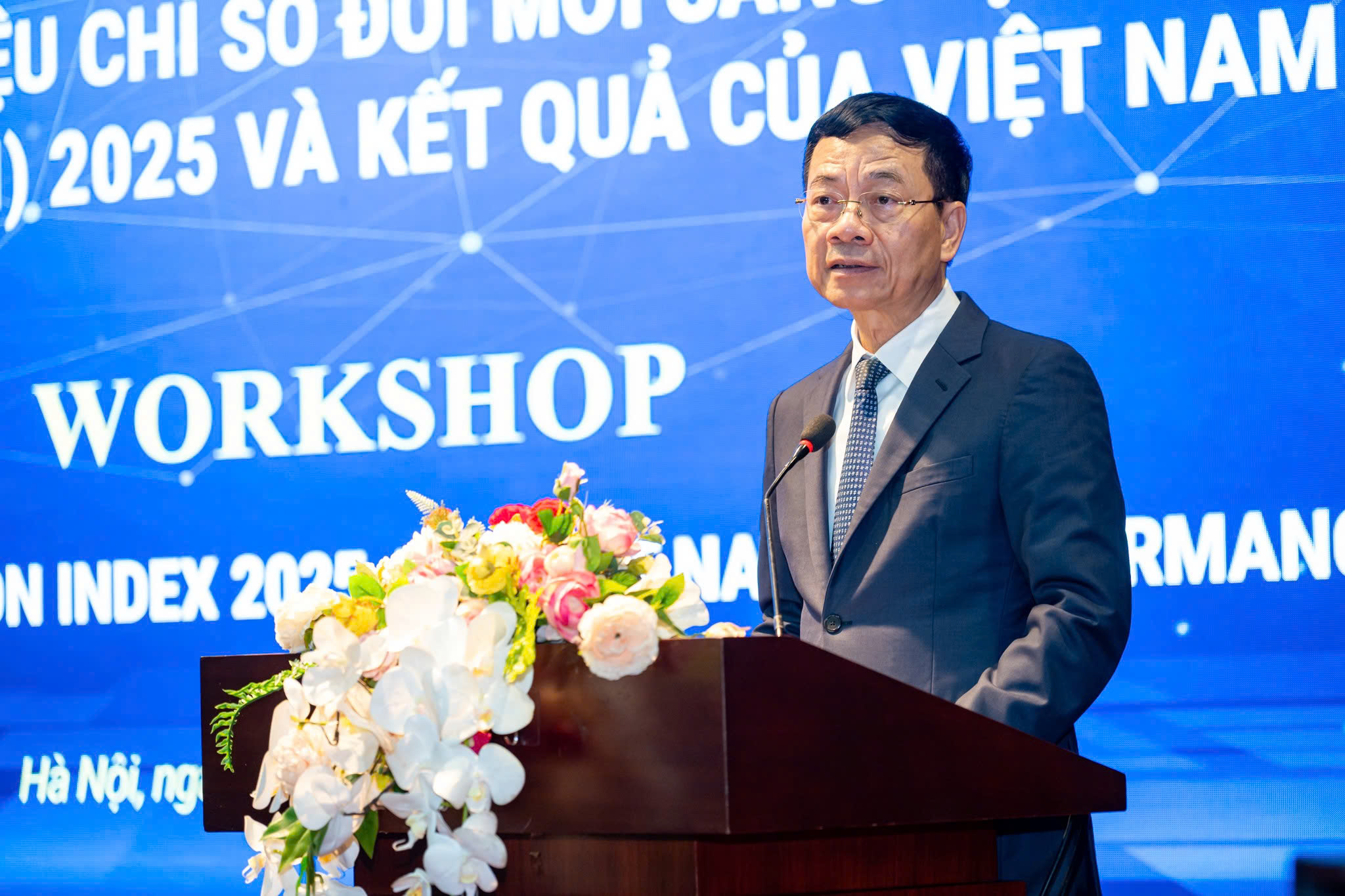
Minister Nguyen Manh Hung delivered the opening speech at the Workshop
Innovation - the core of development
In his opening speech at the workshop, Minister Nguyen Manh Hung emphasized that in the "trio": Science of technology, innovation and digital transformation, the focus is on innovation. Innovation must bring science of technology to touch, change and solve practical problems in Vietnam.
Forming a spirit of innovation among the entire population, making innovation a way of life, a lifestyle of all people, of all organizations. Forming a start-up nation based on digital technology, based on innovation and creativity. Vietnamese innovation is innovation for all people.
According to the Minister, the WIPO GII index is a fairly comprehensive index to measure innovation. We can look at this to know how to improve Vietnam's innovation capacity. Guiding and clarifying the meaning of each index is important to promote innovation.
The Minister of Science and Technology officially requested WIPO to have a program to help Vietnam improve its GII ranking. The Minister affirmed that Vietnam aims to be in the global top 30 in GII within the next 5-10 years. This is a very challenging goal. Therefore, the support of WIPO and the Director General of WIPO is needed.
Four priority pillars to improve GII ranking
In order for Vietnam's position on the GII rankings to continue to improve, Minister Nguyen Manh Hung said that Vietnam must persistently implement many synchronous solutions, including four key solutions.
First, continue to improve the institutions and environment for Vietnamese innovation. We need to remove barriers in law, financial mechanisms, intellectual property, and strongly encourage businesses to invest in R&D and apply new technologies.
The Minister said that from now until the end of the year, intellectual property, technology transfer, and high technology laws will be amended. The main idea of this intellectual property law amendment is that intellectual property must turn research results into assets that can be traded, and only then will there be a Vietnamese science and technology market.
The Minister believes that intellectual property must become an asset of the enterprise, can be valued, bought and sold, included in financial reports, can be used as collateral for borrowing capital, contributing capital, especially new technology assets.
"The most important shift of intellectual property is the shift from protecting rights to assetizing, commercializing and marketizing research results. Intellectual property becomes a strategic competitive tool for enterprises and the country. A developed country is a country where intangible assets and intellectual property account for 70-80% of total national assets. Vietnam has reached the stage where it must prioritize the development of intellectual property to develop the country into a developed, high-income country," the Minister emphasized.
Second, invest heavily in science and technology infrastructure, innovation and digital infrastructure. Research centers, laboratories, supercomputers, open data and national interconnectivity will be the foundation for promoting innovation.
Third, develop high-quality human resources, from innovating STEM education, connecting universities, institutes and businesses, and attracting and employing domestic and foreign talents.
Fourth, promote innovation in businesses. Businesses must be the center of the innovation ecosystem. The State will accompany with financial support programs, venture capital funds, research orders and prioritize public procurement for new products.
"If we do well in the above four pillars, I believe that Vietnam's position on the GII rankings will continuously improve. But more importantly, innovation capacity will become the country's true strength, contributing to realizing the goal of a developed, creative and powerful Vietnam by 2045," the Minister emphasized.
WIPO: Vietnam is on the right track
WIPO Director General Daren Tang highly appreciated Vietnam's strong progress. He said that Vietnam has set an ambitious goal of becoming an upper-middle-income industrialized country by 2030 and a high-income country by 2045. To achieve this, innovation and intellectual property will be key, with Resolution 57 playing a guiding role, turning science, technology and innovation into a central driving force for development.
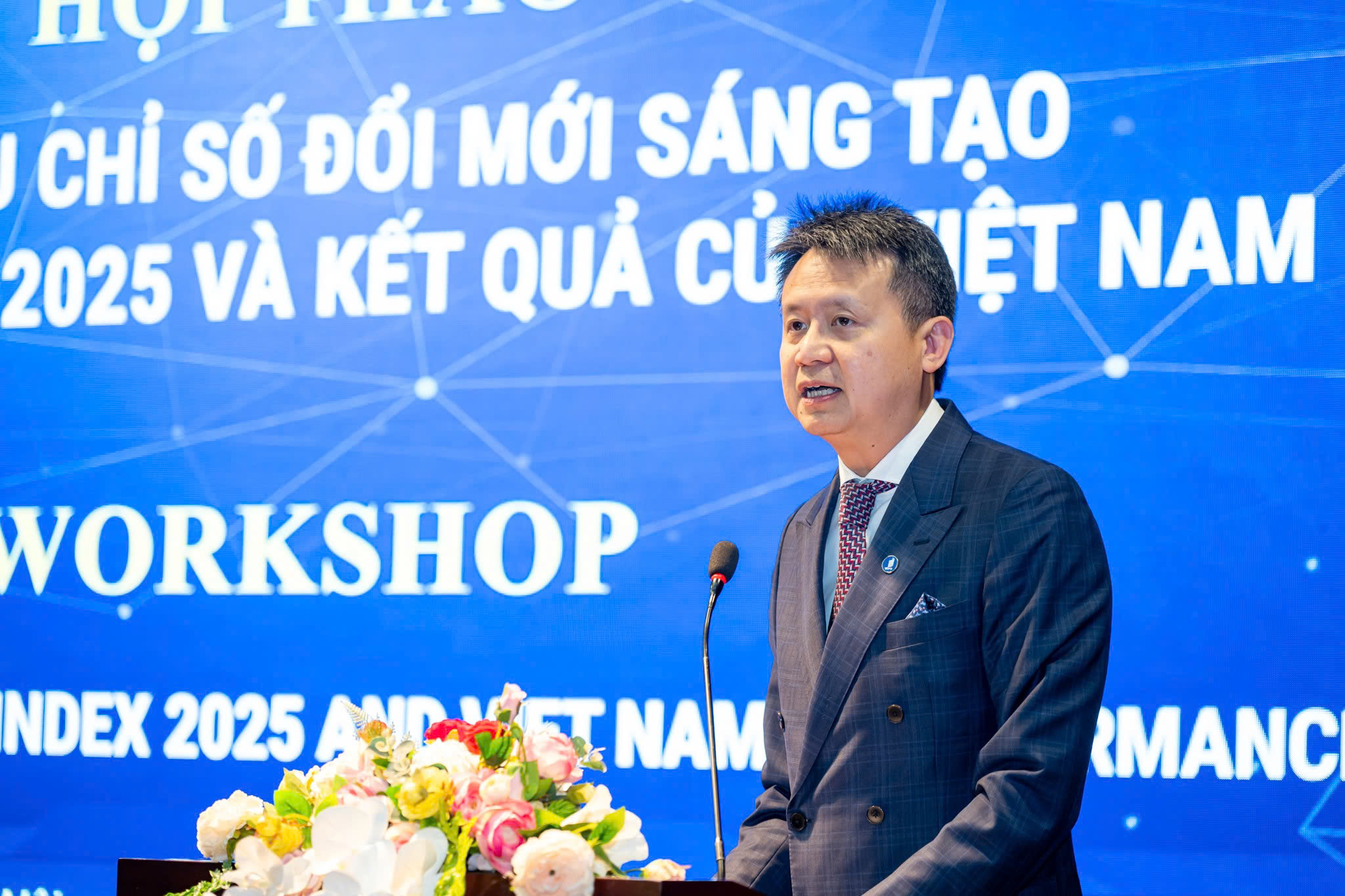
WIPO Director General Daren Tang speaks at the Workshop.
According to the GII 2025 report, Vietnam ranked 44/139 economies, 2/37 in the lower middle-income group and 9th in the Southeast Asia, East Asia and Oceania region. Notably, Vietnam has always maintained outstanding performance compared to its income group over the past decade.
A series of indicators show outstanding strengths such as the proportion of high-tech exports and imports in trade, creative goods exports, labor productivity growth, mobile application innovation, etc.
One of the important reasons helping Vietnam maintain outstanding performance is its governance method. Since 2017, the Government has considered GII as a management tool and continuously proposed solutions to improve each indicator. In addition, Vietnam has "localized" GII into the Provincial Innovation Index (PII), helping localities self-assess and compete fairly; and promulgate intellectual property policies that are closely linked to innovation...
Recommendations from international experts
At the workshop, Mr. Sacha Wunsch-Vincent, a WIPO expert, made recommendations to help Vietnam continue to improve its GII ranking, focusing on 5 pillars: Investing more and more effectively in R&D; building a close link between science and industry; moving from "assembly" to proactive production; developing a startup ecosystem and growth finance; forming and managing intangible assets well to attract value.
Experts also said that innovation does not appear naturally, but must be created by institutions, infrastructure, human resources, businesses and synchronous policies. Vietnam is converging all these factors, with high political determination, the accompaniment of the science and technology community, businesses and international support from WIPO./.