Promoting the application of technology in smart agricultural production
09 Nov, 2025
Implementing Resolution No. 57-NQ/TW of the Politburo on breakthroughs in science and technology development, innovation and national digital transformation, Khanh Hoa province is actively promoting the process of transforming agricultural production towards modernity and sustainability.
The application of high technology and integration of smart solutions into production is identified as the main direction to improve productivity, product quality and build a smart agricultural ecosystem.
Building a sustainable farming process
Many cooperatives and farms in Khanh Hoa are actively converting to a circular economic model, applying advanced farming standards such as VietGAP and organic.
A typical example is the high-tech durian growing model at Sakura Farm (Dong Khanh Son commune) with a total area of 45 hectares, the farm specializes in growing high-value durian varieties such as Musang King and Ri6 (of which 5 hectares are being harvested). The farm's highlight is the comprehensive application of technology in production, the water-saving irrigation system and fertilization through the irrigation system are all programmed to operate automatically.
In particular, the farm also uses modern machinery systems and artificial intelligence (AI) technology to analyze and diagnose the "health" of the soil, thereby providing accurate indicators and recommending timely treatment options.
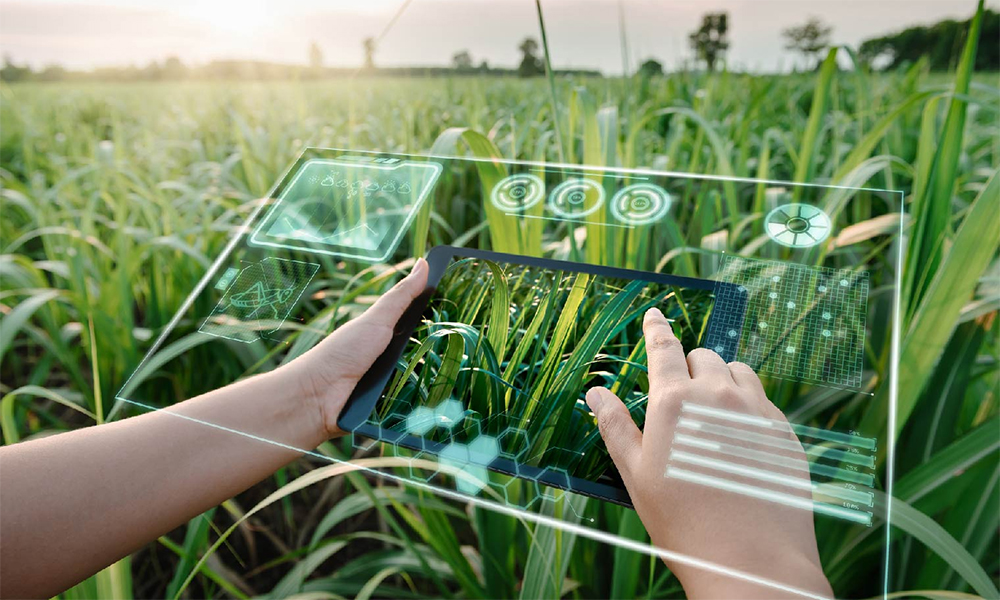
Illustration photo.
In addition, using flycams daily to monitor crops also helps the technical team closely monitor the growth process of the plants, monitor water sources and detect abnormalities.
Mr. Nguyen Pham Minh Man, owner of Sakura Farm, shared that integrated technology devices allow for accurate monitoring of soil environmental factors such as humidity, nutrition, pH, etc., thereby adjusting irrigation, fertilization and other care measures to optimize the development of durian trees in each stage. "Applying technology in agriculture has greatly helped the farm in maintaining and improving sustainable farming processes. Cultivating durian trees according to the organic model helps the trees not to weaken when flowering and fruiting, the durian garden maintains a stable balance, the trees are healthier, the products are of high quality and do not contain chemical residues," said Mr. Nguyen Pham Minh Man.
In addition to promoting the integration of technology in production, research and technology transfer activities are also being strongly implemented by units in Khanh Hoa province.
Nha Ho Cotton Research and Agricultural Development Institute (under the Vietnam Academy of Agricultural Sciences) is one of the pioneers in researching and applying biotechnology and modern genetic engineering to select and create many crop varieties such as grapes, apples, asparagus, aloe vera, corn, rice, mango, longan, jackfruit... with high yield, good quality, adaptable to climate and soil conditions in Khanh Hoa and the South Central region to transfer to people and production cooperatives.
Dr. Phan Cong Kien, Deputy Director of Nha Ho Cotton Research and Agricultural Development Institute, said that in addition to research on breeding, the institute also researches digital technology processes in water and nutrition use, and applies sensors to adjust microclimate factors (light, temperature, soil humidity, air) in greenhouses, etc. to optimize productivity and improve the quality of agricultural products; transfer many modern farming models such as growing grapes in greenhouses using mobile roofs, Y-shaped trellises, apple orchard netting technology, water-saving irrigation technology, intercropping legumes in gardens and using biological traps, etc.
These models contribute to increasing the efficiency of farming and fertilizer use, reducing pesticides, improving soil health, and minimizing environmental impacts.
From now until 2030, Nha Ho Cotton Research and Agricultural Development Institute will prioritize mobilizing resources to promote research and selection of new crop varieties that are resistant to pests and diseases and adapt to weather conditions caused by climate change. At the same time, focus on developing solutions to apply microbiological technology and nanotechnology to improve soil health.
At the same time, the Institute also promotes research and application of Internet of Things (IoT) technology in cultivation, water management, nutrition, microclimate regulation in greenhouses and net houses; use Artificial Intelligence (AI) in monitoring and integrated pest management, promote the application of mechanization technology to serve production and deep processing of local agricultural products. Thereby, saving costs and improving production efficiency per unit of cultivated area.
Towards modern agriculture
According to the Department of Agriculture and Environment of Khanh Hoa province, in recent times the province has focused on directing the synchronous implementation of policies to support high-tech agricultural production, and has now expanded the area to over 1,003 hectares.
The area of crops certified organic according to US (USDA-NOP), Japanese (JAS) and European (EU) standards has exceeded 5,599 hectares, including cashews, melons, asparagus, dates, longans, mangoes, etc.
The whole province has 163 growing area codes with an area of over 5,171 hectares; of which there are 98 domestic codes and 65 growing area codes for export, in addition there are 3 codes for mango and durian packing facilities for the European (EU) and Chinese markets.
Some key crops in Khanh Hoa province have affirmed their export position to foreign markets such as durian, mango, grapefruit, aloe vera, asparagus.
For grapes and apples, these are also two key crops that bring high economic value to farmers. Apples can bring profits of 161-267 million VND/ha/year; new grape varieties grown according to the high-tech agricultural model bring profits of about 600 million VND/ha/crop and can produce 2 crops per year.
To create a breakthrough for the agricultural sector, Khanh Hoa continues to focus on developing specific groups of crops and livestock such as grapes, apples, aloe vera, green asparagus, onions, garlic, goats, sheep, bird's nests, mangoes, purple sugarcane, durian, high-quality rice varieties, etc.
At the same time, the province strongly attracts businesses, units, and cooperatives to participate in investing in building a closed agricultural value chain from production to consumption, deeply applying digital technology to increase the added value of local agricultural products.
Mr. Trinh Minh Hoang, Vice Chairman of Khanh Hoa Provincial People's Committee, informed that the province is reviewing and planning the development of production areas in a scientific manner, based on the natural conditions and potential of each locality and region.
The province also focuses on developing fruit tree growing areas, essential oil trees, high-tech agriculture and agricultural models combined with eco-tourism. In addition, standardizing production processes, improving the quality of varieties, building local agricultural product brands, and applying digital technology in updating markets and consuming products are also being implemented synchronously.
In the coming time, Khanh Hoa will increase the mobilization of resources from programs and projects to continue investing in research on key plant and animal varieties, transferring farming technology, deep processing to diversify products, training digital human resources and promoting cooperation between businesses, scientists and farmers in the sustainable production chain.
The implementation of Resolution 57-NQ/TW not only helps Khanh Hoa innovate its growth model but also contributes to modernizing agriculture, improving farmers' lives, and promoting rural economic development in the new period./.