The pioneering role of higher education institutions in promoting national green transition.
01 Nov, 2025
Vietnam is facing serious challenges from climate change and environmental pollution, with the cost of damage accounting for 3.2% of GDP in 2020 and could increase to 14.5% of GDP by 2050 if there are no drastic solutions.
In that context, the Party and State have identified two strategic goals: Making Vietnam a high-income country by 2045 and achieving net zero emissions by 2050, as committed at the COP26 Conference.
The important legal foundation is the “National Strategy on Green Growth for the period 2021–2030, vision 2050” (Decision No. 1658/QD-TTg), emphasizing the balance between growth and sustainability. In which, science, technology and innovation are considered the core driving force to restructure the economy in a green direction, based on the spirit of "if you want green, you must be digital, if you want digital, you must be green".

Green transformation and digital transformation are likened to “twins”, supporting each other. Digital technology – with applications of artificial intelligence (AI), big data (Big Data), Internet of Things (IoT) – is a key tool to optimize resource management, control pollution and develop clean production models. In contrast, renewable energy solutions, green chemistry, circular technology and smart biomaterials open up new spaces for sustainable development of the digital economy and digital society.
University – the center of knowledge and innovation for the green economy
Universities are not only places to train human resources but also centers of knowledge, where green technology solutions are formed, aiming to solve global problems. With that role, higher education institutions need to strongly transform, from “teaching – research” to “teaching – research – innovation – entrepreneurship”.
The Posts and Telecommunications Institute of Technology (PTIT) is a typical example. Many young research groups have launched technological initiatives towards sustainable development. The WoodID project - a system for identifying and tracing the origin of wood using biometric codes - not only helps protect forests but also creates a data platform for legal trade, transparent product origin. The P-Coin project - a green digital currency solution - aims to encourage environmentally friendly consumption behavior through a "carbon reward" mechanism.
Such initiatives show the special role of universities: not only researching but also creating new products, services, and business models based on green technology. This is how universities contribute to concretizing the Green Growth Strategy, turning science - technology - innovation into effective tools for implementing sustainable development policies.
In addition, universities are also a bridge for cooperation between the State, businesses and the community in testing, transferring and replicating green economic models. The formation of Green Innovation Hubs in universities helps connect research knowledge with production practices, supporting small and medium-sized enterprises to transform technology towards low carbon.
Promoting institutions and cooperation - the key to multiplying innovation value
For green initiatives to come to life, a synchronous ecosystem is needed: open institutions, green finance, flexible testing mechanisms and multi-dimensional cooperation networks. The Ministry of Science and Technology is currently developing the Law on Science, Technology and Innovation, with the spirit of taking enterprises and science and technology organizations as the center, while encouraging universities to strongly participate in applied research activities and commercialization of results.
The new law also adds a policy sandbox mechanism, allowing for testing of innovative models in the fields of energy, environment, and smart cities. This is an important legal corridor for universities, research institutes, and technology enterprises to deploy green solutions on a real scale, before replicating them.
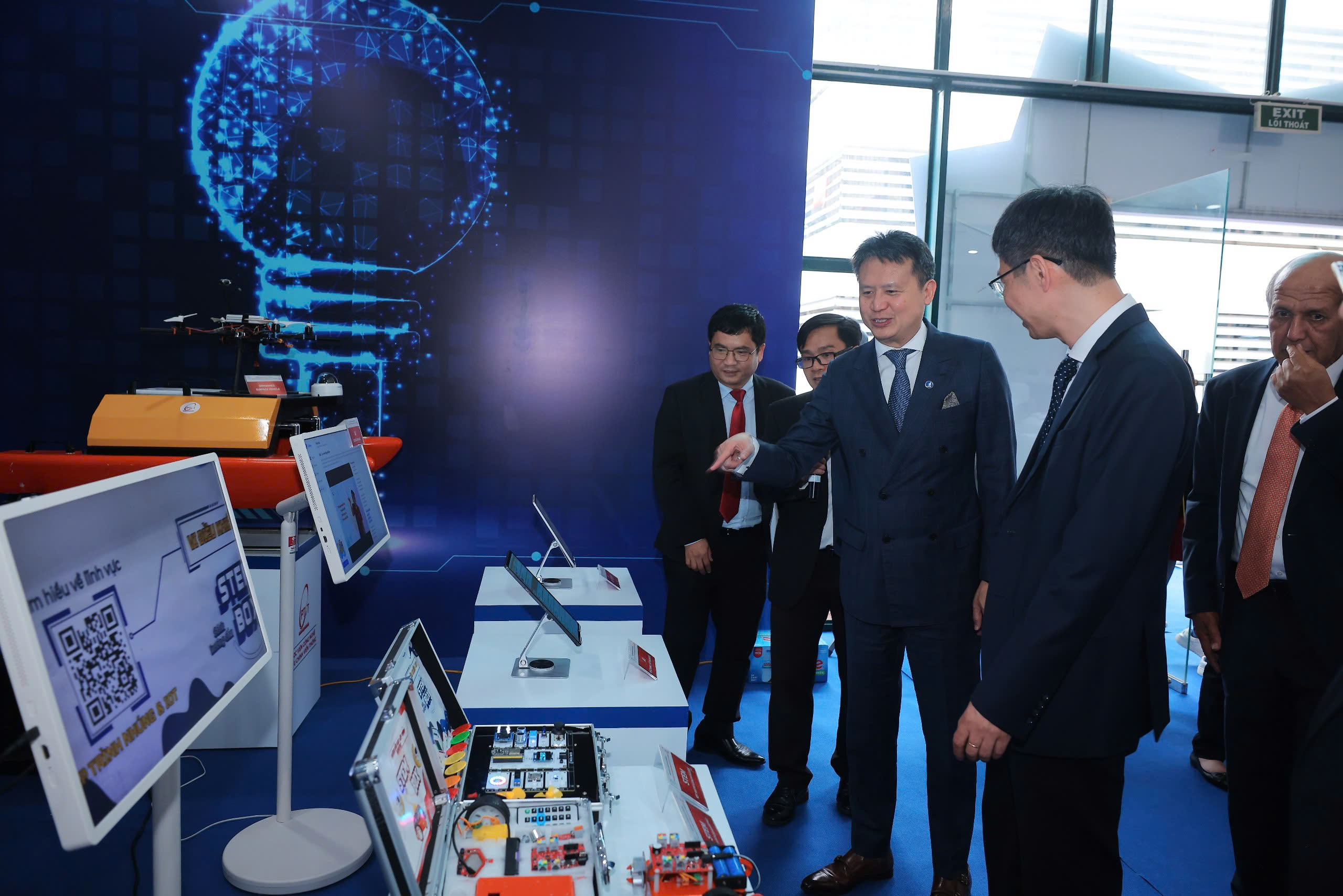
Along with that, the establishment of the Green Venture Fund, the National Program on Circular Technology, and the Vietnam Innovation Network (VIST Network) will create conditions for young scientists, especially students, to access resources, mentors, and international partners.
Promoting international cooperation is also a key factor. Through cooperation projects with the European Union, Korea, Japan, or organizations such as UNDP, WB, ADB, Vietnam can access advanced knowledge sources, low-carbon technology, and effective green governance models. Universities play the role of “knowledge gateways”, receiving and transferring these values into domestic practice.
Green transformation is not just a story of technology, but a process of fundamentally changing the development model – from “growth by resources” to “growth by knowledge”. Universities are the source of that knowledge. Investing in universities, research and innovation is investing in the country's green future.
In the long term, for science, technology and innovation to truly become the pillars of green transformation, three factors need to go hand in hand: open institutions - core technology - creative people. In which, people - especially the young generation - are the center of all development policies.
When science, technology and innovation are placed at the center of the national development strategy, when universities truly become centers of creativity and knowledge transfer, Vietnam's green transformation will not only be a commitment, but will become a widespread innovation movement, spreading to every business, every locality and every citizen.